April 25, 2026 • Thiên-Anh Roussel • 9 min reading time • Prices verified June 18, 2026
Le Creuset vs Staub Stoneware: What the Premium Price Actually Buys Your Soufflé
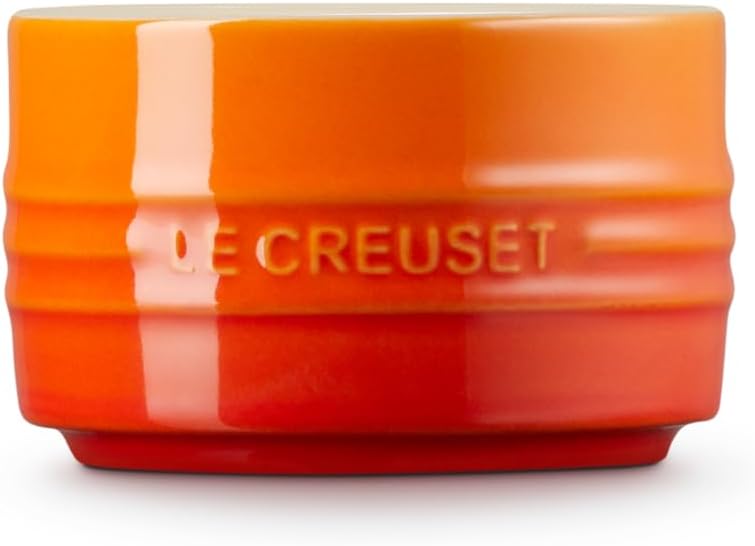
If you’ve started researching soufflé dishes and found yourself staring down a $150-to-$185+ decision between Le Creuset and Staub, welcome — you’re exactly where serious home bakers eventually land. A soufflé dish (sometimes called a ramekin when individual-sized, or a soufflé mold when communal) is a straight-sided ceramic or stoneware vessel specifically designed to channel heat evenly upward, so the beaten egg whites inside can rise in a controlled column above the rim. The straight walls are the whole point: they prevent the batter from spilling sideways and guide that famous “crown.” Both Le Creuset and Staub make stoneware versions at premium prices, and both are genuinely excellent — but they are not interchangeable. This article breaks down exactly where they differ on the things that actually affect your bake: heat distribution, glaze longevity, oven-to-table presentation, and the less-discussed question of which brand holds its value if your needs change.
By the end, you’ll have a clear decision rule. Let’s get into it.
What You’re Actually Paying for at the $150–$185+ Tier
At the entry level — HIC or Mason Cash porcelain ramekins in the $12–$35 range — you’re buying a shape and a basic thermal mass. The material is thinner, the glazes are functional, and the dishes do the job. At the Emile Henry level ($85–$95 for the Grand Cru soufflé dish), you step up to a proprietary Burgundy clay that reviewers, including those writing for Serious Eats in their soufflé dish testing coverage, consistently note for its unusually even heat distribution and chip-resistant glaze surface. But Le Creuset and Staub represent something different: you’re now paying for brand heritage, material density, glaze engineering, and the kind of oven-to-table aesthetics that make the dish itself part of the dining experience.
What the premium actually buys, broken down:
- Thermal mass: Heavier stoneware absorbs more heat and releases it more slowly and evenly than thinner porcelain. This matters enormously for soufflés, where uneven heat creates uneven rise.
- Glaze integrity: Both brands invest heavily in their glaze systems — the hard, smooth surface that seals the stoneware, resists crazing (fine surface cracks that develop over time from repeated thermal cycling), and makes the dish dishwasher-safe over years of use.
- Oven-to-table legitimacy: At a dinner party, the vessel arriving at the table is part of the presentation. Both brands deliver this; where they differ is in how they deliver it.
The question is which brand’s specific engineering bets align with how you actually bake.
Heat Distribution, Glaze Durability, and Aesthetics: A Head-to-Head Breakdown
This section addresses the three axes where Le Creuset and Staub genuinely diverge. Each subsection ends with a tier marker so you can navigate quickly to the recommendation that fits your context.
H3: Heat Distribution — Speed vs. Sustained Release
This is the most practically important comparison for soufflé work.
Le Creuset stoneware uses a proprietary clay body fired at high temperatures to produce a dense, relatively uniform material. Across aggregated owner reviews and testing write-ups — including coverage in The Kitchn’s stoneware comparison piece and Epicurious’s ramekin roundup, both cited here in plain text — the consistent pattern is that Le Creuset dishes heat evenly from sides and base but are measurably lighter in hand than equivalent Staub pieces. That lighter weight means faster preheat: the dish reaches target temperature more quickly. It also means slightly faster cool-down once it leaves the oven. For a soufflé that goes directly from oven to table in under 60 seconds, this is rarely a problem.
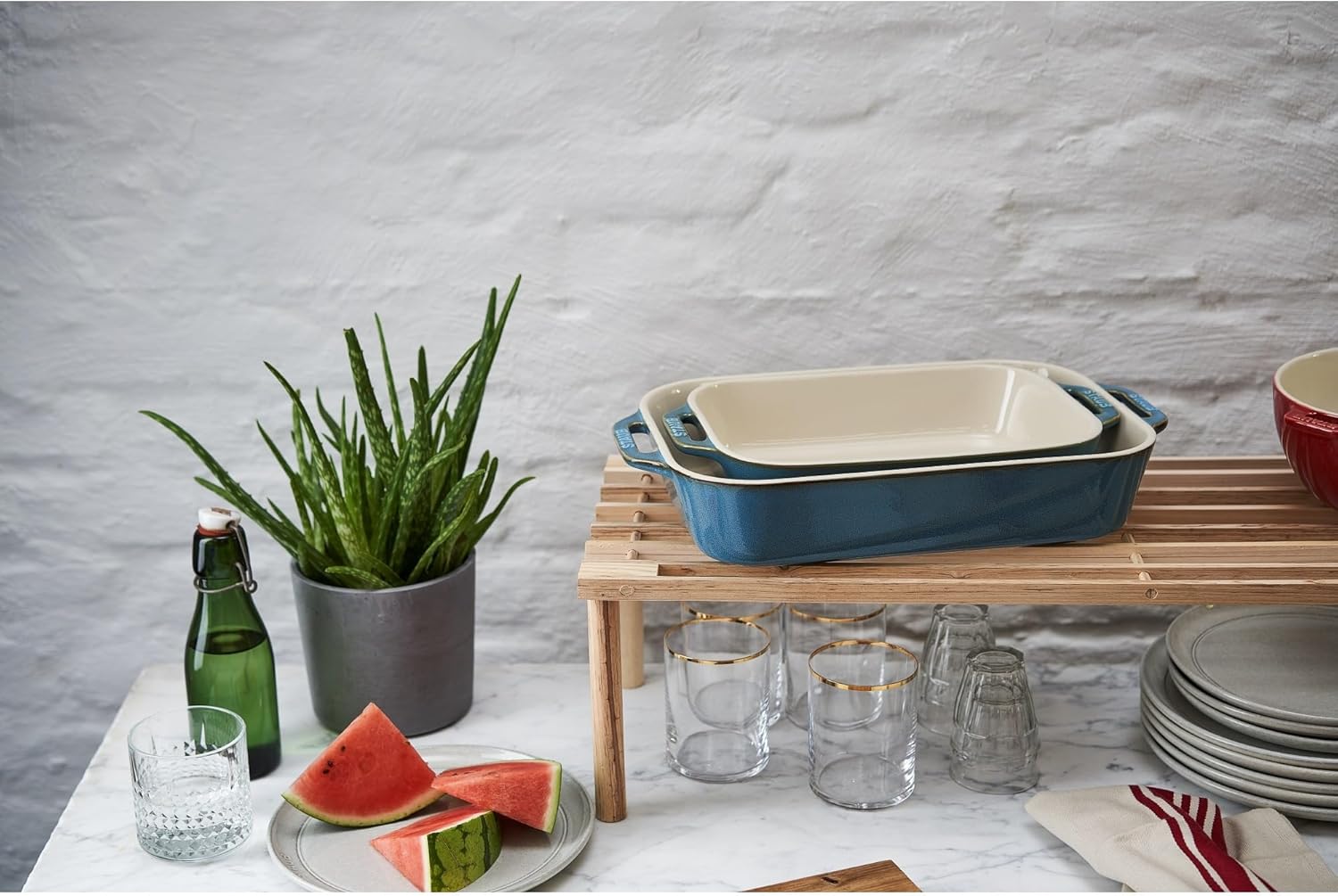
Staub stoneware is denser and heavier — noticeably so when you pick up equivalent dish sizes side by side. Testing notes and owner reports published by Serious Eats and Food52 in their respective soufflé and bakeware equipment coverage describe Staub’s extra mass as producing a slower, more sustained heat release. If you’re running back-to-back soufflés for a dinner party — baking a second round while guests eat the first — Staub dishes hold residual heat longer, which affects preheat timing for subsequent bakes. You need to account for this; it’s not a flaw, it’s a characteristic that rewards deliberate temperature management.
Comparison table — thermal behavior by use context:
| Use context | Le Creuset advantage | Staub advantage |
|---|---|---|
| Single soufflé per service | Faster preheat, more forgiving timing | Le — $17.95 |
| Sequential soufflés, dinner party | — | Sustained heat buffer between rounds Staub — $59.95 |
| High-volume or professional-adjacent use | — | Thermal stability across repeated cycles Staub — $59.95 |
The practical decision point: If you’re baking a single soufflé per service — the most common home scenario — the difference in thermal mass is unlikely to determine your outcome. Technique and batter preparation dominate. But if you’re running multiple soufflés sequentially, or if your oven has known hot spots you’re trying to compensate for with a thermally stable vessel, Staub’s additional mass gives you more buffer.
Staub
$59.95
In stock on Amazon
Check price on AmazonH3: Glaze Durability — Smooth and Stain-Resistant vs. Matte and Abrasion-Tolerant
Both brands stake a real reputation on glaze performance, and both back their stoneware with warranties covering manufacturing defects. But the glazes behave differently over years of use.
Le Creuset’s enamel glaze is their signature — the same engineering heritage that defines their cast iron line, translated into stoneware form. Long-term owner write-ups synthesized by The Kitchn in their stoneware survey coverage consistently report that Le Creuset’s glaze resists staining well and maintains a high-gloss finish over years of dishwasher use. The glaze can show surface marks from metal utensils if the dish is used for gratins or other preparations where scraping occurs. For a dedicated soufflé dish that sees only silicone or wooden tools, this is a non-issue.
Crazing — the network of fine surface cracks that develops when a glaze is subjected to repeated thermal expansion and contraction — is the long-term risk for any ceramic bakeware. Cook’s Illustrated’s soufflé dish buying guide notes that crazing typically appears first at the base of dishes placed cold into a hot oven. Both Le Creuset and Staub instruct users to avoid extreme thermal shock (cold dish directly into a 450°F oven is the scenario to avoid), and both glaze systems perform well under normal use. In aggregated owner reporting reviewed in Serious Eats’ soufflé dish testing, Le Creuset’s glaze is characterized as smoother and more stain-resistant; Staub’s glaze is described as marginally more matte and reported as slightly more forgiving of surface micro-abrasion over extended high-use cycles.
The practical decision point: For a dedicated soufflé dish used properly — warm oven, no thermal shocks, no metal utensils — the glaze durability difference is not going to determine your purchase. Both are built for decades of normal home use. The distinction becomes more meaningful in a prosumer or small patisserie context with high weekly cycles, where Staub’s slightly more abrasion-tolerant surface may favor longer sustained performance.
Staub
$59.95
In stock on Amazon
Check price on AmazonH3: Oven-to-Table Aesthetics — Expressive Color vs. Quiet Authority
At $150–$185+ for a set, you are partly paying for an object that looks right on a table. This is legitimate. A soufflé is theater — it has roughly two to three minutes between coming out of the oven and beginning to deflate, and the dish it arrives in contributes to the experience.
Le Creuset’s palette is wide and iconic. The Volcanic orange, the Marseille blue, the Cerise red — these are colors with cultural recognition. Epicurious’s bakeware roundup notes that Le Creuset pieces read as “recognizably Le Creuset” to most dinner guests, which is either a feature or irrelevant depending on your perspective. If you’re building a kitchen where the equipment is part of the visual identity, Le Creuset’s color range is unmatched in the stoneware tier.
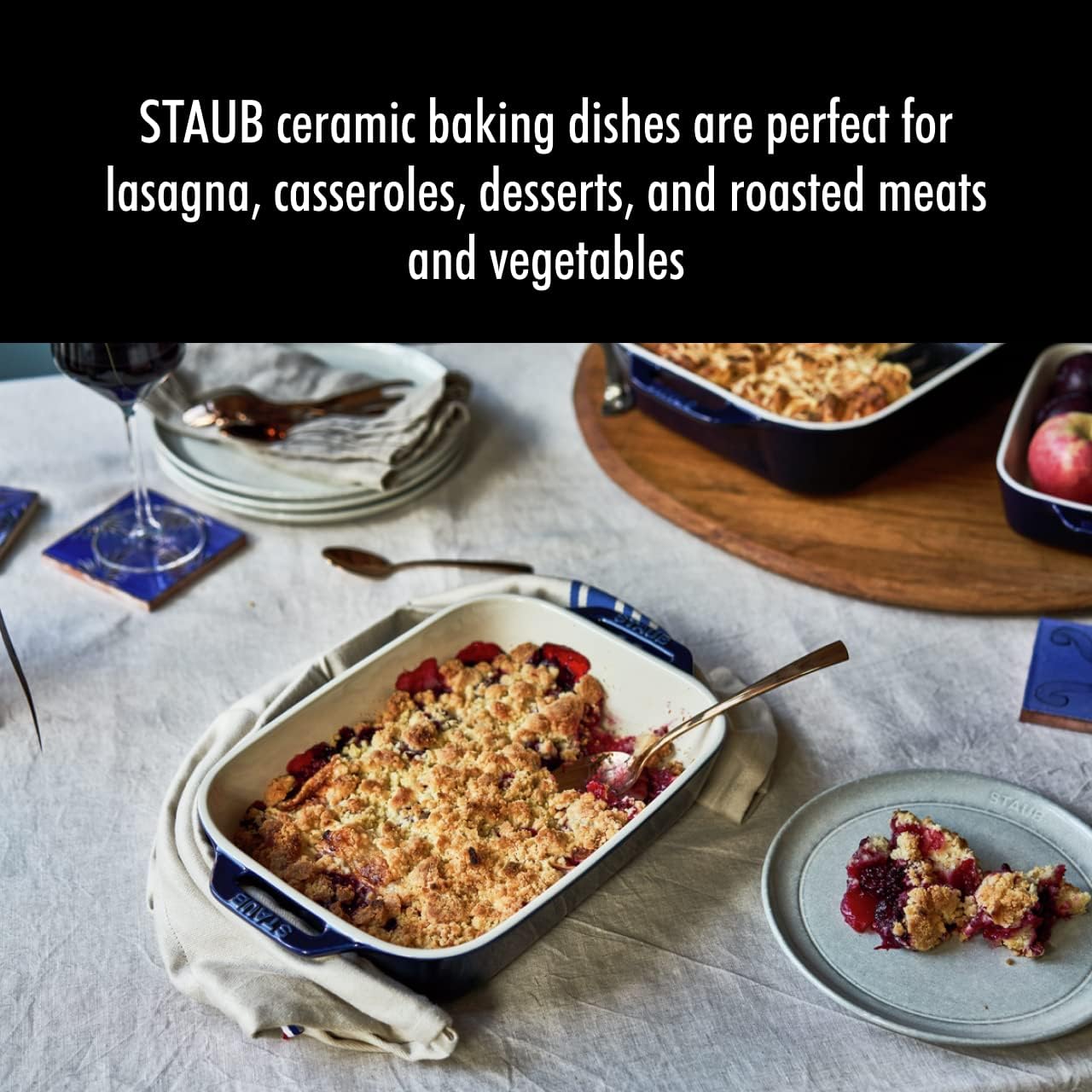
Staub’s aesthetic runs quieter and more uniform — typically darker matte exteriors in colors like basil, dark blue, and graphite. Food52’s equipment coverage has described Staub’s oven-to-table presence as “quietly authoritative.” For a private dining or small patisserie context where you want the food to lead the presentation rather than the vessel, Staub’s restrained aesthetic is an advantage. Le Creuset reads as celebratory; Staub reads as professional. Neither is wrong — they serve different table dynamics.
Staub
$59.95
In stock on Amazon
Check price on AmazonPricing, Specs, and Sourcing at a Glance
| Le Creuset Stoneware Soufflé Dish (1.5 qt) | Staub Ceramic Soufflé Dish (1.5 qt) | |
|---|---|---|
| Typical retail price (May 2026) | ~$55–$70 per dish | ~$60–$75 per dish |
| Full set pricing (4 individual ramekins) | ~$150–$180 | ~$160–$185 |
| Oven-safe to | 500°F (260°C) | 500°F (260°C) |
| Dishwasher safe | Yes | Yes |
| Glaze finish | High-gloss, wide color range | Matte-to-satin, darker palette |
| Relative thermal mass | Moderate — faster preheat | Higher — more sustained release |
Prices reflect authorized U.S. retailer listings as of May 2026. Set pricing varies by configuration. Authorized sourcing channels include Williams Sonoma, Sur La Table, and each brand’s direct retail site. Gray-market and third-party marketplace listings for both brands have documented authenticity issues at this tier — a dish that looks right but was fired to different specs is a real risk when buying outside authorized channels.
The Clear Decision Rule
If you are baking soufflés primarily for home dinner parties and care about a vivid, recognizable color story across your batterie de cuisine, choose Le Creuset. The lighter thermal mass means faster preheat and more forgiving timing for a single-service bake. The glaze is proven over decades. The color selection lets you match or contrast with existing equipment. It’s the warmer, more expressive choice — the one your guests will recognize the moment the dish arrives at the table.
If you are baking soufflés in higher-volume or sequential-service contexts — or if you’re building a table aesthetic around understated, professional-grade presentation — choose Staub. The additional thermal mass rewards careful temperature management and provides more buffer for oven inconsistencies. The matte, darker aesthetic travels well from kitchen to dining room without demanding visual attention. Owner communities reviewed in Serious Eats’ soufflé dish testing consistently note that Staub stoneware holds up particularly well to the rhythms of professional-adjacent use.
If the decision genuinely feels even, the tiebreaker is color availability for the specific dishes you need. Both brands rotate colorways seasonally; check authorized retailer stock before committing to a set configuration. And if you’re earlier in your soufflé journey and not yet certain you want to commit at this price point, the Emile Henry Grand Cru soufflé dish at $85–$95 is the honest stepping-stone — it delivers serious heat performance at a lower entry cost, and the upgrade path to Le Creuset or Staub remains open once you’ve confirmed the format fits your cooking.
One final note: at this price point, neither brand is a wrong answer. The soufflé doesn’t know which brand fired its vessel. What it does know is whether the walls are straight, the heat is even, and the baker has managed their whites correctly. The dish supports the technique — it doesn’t substitute for it. Buy the one you’ll be proud to bring to the table, and then put your energy into the batter.