May 14, 2026 • Thiên-Anh Roussel • 8 min reading time • Prices verified June 18, 2026
CorningWare and Pyrex in the Soufflé Kitchen: Honest Answers for Practical Bakers
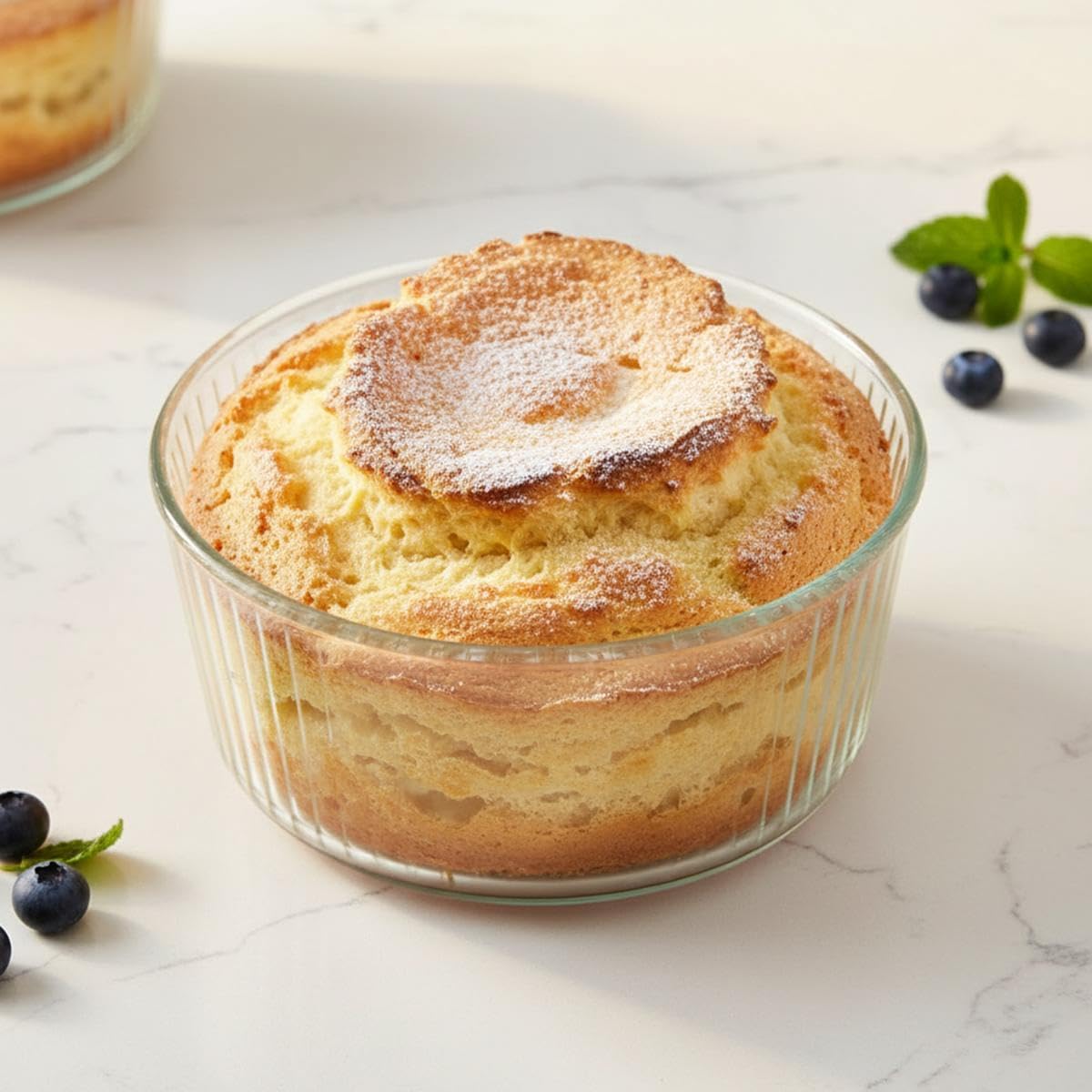
If you’ve ever stared at a recipe calling for a “straight-sided soufflé dish” and then glanced at the stack of CorningWare or Pyrex already in your cabinet, you’ve asked a very reasonable question: can I just use what I have? The honest answer is: sometimes yes, often partially, and occasionally no — and the reason involves physics more than brand loyalty. A soufflé is a baked egg-and-sauce preparation that rises by trapping steam and air inside a delicate foam; the dish it bakes in directly influences how fast heat reaches the batter, whether the sides support a clean rise, and how the finished result looks when you carry it to the table. This guide is for the baker who already knows the basic technique and wants a clear-eyed, practical breakdown of where CorningWare and Pyrex fit in the soufflé kitchen — and where they fall short.
What CorningWare and Pyrex Actually Are (and Why It Matters for Baking)
These two brands are often mentioned in the same breath, but they are made from fundamentally different materials, and that difference matters the moment your oven hits 375°F.
Pyrex (the U.S. consumer line sold since the 1998 ownership change) is soda-lime glass — the same general family as a drinking glass, engineered to be thicker and more heat-tolerant. The original borosilicate Pyrex formula, which handled thermal shock dramatically better, was discontinued for most U.S. consumer products decades ago, though European-market Pyrex (sold under Arc International) still uses borosilicate. The Kitchn’s explainer on the two materials notes that the distinction matters most when you’re moving dishes between temperature extremes — from a cold oven to a hot one, or from oven to a cool countertop. Soda-lime glass is more vulnerable to thermal shock than borosilicate, which is worth keeping in mind for soufflé baking, where you’re often working with a preheated oven and a dish that’s been at room temperature.
CorningWare — in its current form — is a vitrified ceramic (pyroceramic in its original CORELLE-adjacent formulation, though today’s CorningWare Stoneware and French White lines are closer to conventional stoneware with a glaze finish). The original white CorningWare with the blue cornflower pattern, produced through the 1980s, was a genuine glass-ceramic (Pyroceram) with exceptional thermal-shock resistance. The modern lines are good, durable stoneware, but they are not the same material as a vintage piece. Cook’s Illustrated’s comparative bakeware notes flag this generational shift explicitly: reviewers who praise “CorningWare” in older forums may be describing properties that don’t transfer to current production.
Why this matters for a soufflé specifically: Heat transfer rate, wall geometry, and surface emissivity (how efficiently a material radiates heat inward toward the batter) all vary by material. Porcelain — the benchmark material for classic soufflé dishes — is dense, relatively thin-walled, and conducts heat with reasonable uniformity. Glass is a poorer conductor but a strong radiant surface. Stoneware is thicker, slower to heat, and holds temperature longer once hot.
The Geometry Problem: Why Walls and Depth Are Non-Negotiable
Before discussing material at all, geometry deserves equal weight. Fine Cooking’s technique reference on soufflé rise explains the mechanism clearly: the batter climbs the straight, vertical walls of the dish as the steam and expanding air push upward. The wall acts as a scaffold. A sloped wall — or a shallower, wider dish — redirects that upward energy outward, producing a wider, flatter result that may not rise above the rim at all.
CorningWare French White casseroles are oval, with gently sloping sides and a wide footprint. They are designed for braises, gratins, and casseroles — applications where lateral surface area is an asset. For a soufflé, the geometry actively works against you.
Pyrex mixing bowls, which bakers sometimes repurpose, are hemispherical — which means the bottom curves away from the heat source, creating uneven bake times between the center and edge of the batter.
Pyrex baking dishes (the classic rectangular or square ones) are obviously out: no depth, no vertical walls.
The one Pyrex form that approaches usable geometry is the Pyrex round casserole dish with relatively straight sides, sometimes sold in 1.5- to 2-quart sizes. Owners in long-run reviews on food forums note that these can produce an acceptable soufflé in a pinch, but the lack of a true vertical wall and the mass of the glass mean the rise is less dramatic and the timing less predictable than with a purpose-built porcelain ramekin or soufflé dish.
The Heat Behavior Tradeoff: Glass, Stoneware, and Porcelain Side by Side
Here is where the practitioner-level tradeoff becomes concrete. The three materials behave differently in ways that cascade through every stage of the bake.
By the numbers:
| Material | Approximate wall thickness | Relative heat-up rate | Heat retention after oven | Thermal shock risk |
|---|---|---|---|---|
| Porcelain (e.g., Pillivuyt) | 4–6 mm | Fast | Moderate | Low |
| Vitrified stoneware (CorningWare) | 7–10 mm | Slow | High | Low–moderate |
| Soda-lime glass (U.S. Pyrex) | 5–8 mm | Moderate | Moderate | Moderate–high |
Sources: published manufacturer spec sheets; Cook’s Illustrated bakeware material overview.
What this table means in practice:
-
Porcelain heats quickly and evenly, which is why French soufflé bakers have used it for generations. The thin, uniform wall gives the batter consistent heat from all directions. Serious Eats’ equipment overview on soufflé dishes points to this thermal consistency as the primary reason purpose-built porcelain dishes — Pillivuyt, HIC, Emile Henry — produce more reliable rises than improvised alternatives.
-
Stoneware (CorningWare) takes longer to come up to temperature, which means your batter is sitting in a dish that’s still climbing while the oven air is already hot. This can produce an uneven bake — the exterior sets before the interior structure is fully developed. The upside is that stoneware holds heat well, so there’s less temperature drop when you open the oven door. For a soufflé, the lag is the bigger problem.
-
Glass (Pyrex) is an interesting case. Glass has relatively low thermal conductivity — it doesn’t move heat through itself as efficiently as ceramic — but it’s highly transparent to radiant heat from the oven elements, which means the outside of the batter can overheat relative to the center. Wirecutter’s baking dish roundup notes that glass is consistently outperformed by ceramic for applications requiring even, controlled heat from the sides of the dish — exactly what a soufflé needs.
When “Good Enough” Is Actually Good Enough
This is the part of the article most guides skip, so let’s be direct about it.
If you are baking a savory soufflé for a weeknight dinner and you own a CorningWare French White round casserole with reasonably straight sides in a 1.5-quart size, you can bake something that tastes like a soufflé. It will not rise as dramatically, the timing will require adjustment (likely add 3–5 minutes and watch for browning), and you should not plan to unmold or present it with the classic “hat” rising above the collar. But the flavor and texture of the interior can still be excellent.
If you are baking individual cheese or chocolate soufflés for guests — the kind where presentation is half the point — CorningWare and Pyrex are genuinely the wrong tools. The rise differential between a 6-oz porcelain ramekin and a repurposed glass dish will be visible and meaningful.
The practitioner’s decision rule:
- If the goal is technique practice or weeknight cooking: use what you have; adjust timing; don’t collar it.
- If the goal is reproducible results for entertaining or development: invest in purpose-built porcelain. The entry point is low — a set of HIC or Mason Cash ramekins runs $12–$35 and eliminates the geometry and heat-behavior variables entirely.
- If you are building toward a serious batterie de cuisine: the CorningWare and Pyrex question becomes moot once you have even a basic set of fluted porcelain dishes. The question then becomes Pillivuyt vs. Emile Henry vs. Le Creuset stoneware — a different conversation about glaze durability and oven-to-table presentation that this site covers in depth elsewhere.
The Vintage CorningWare Exception
One caveat worth naming for completeness: if you have inherited or sourced original Pyroceram CorningWare (the white with blue, brown, or wildflower pattern, manufactured roughly 1958–1985 in the U.S.), you have a materially different product. The original Pyroceram glass-ceramic handled thermal shock exceptionally well and was used in laboratory and military applications before it became a kitchen staple. A round vintage CorningWare casserole with straight-ish walls bakes more like stoneware than like modern CorningWare — still not ideal for soufflé geometry, but more thermally predictable.
The caveat on the caveat: sourcing vintage CorningWare through secondary markets in 2026 involves the same authentication challenges as sourcing any vintage kitchen equipment. The Replacements, Ltd. catalog and dedicated CorningWare collector communities (active on several collector-focused forums) are better resources for identifying genuine Pyroceram pieces than general resale platforms, where mislabeling is common.
The Bottom Line
CorningWare and Pyrex are genuinely excellent products — for what they were designed to do. Braises, casseroles, gratins, reheating: all well within their wheelhouse. For soufflés, the geometry constraints are the first barrier, and the heat-behavior differences compound the difficulty. Neither brand offers a product that matches the straight-walled, uniformly thin porcelain geometry that makes soufflé baking predictable.
The practical upshot for a baker at the intermediate stage: don’t let the absence of a proper soufflé dish stop you from practicing the technique with what you own. But don’t let improvised results set your baseline expectations either. A first set of porcelain ramekins is one of the lowest-cost, highest-impact equipment upgrades available in this particular discipline — and once you’ve baked the same formula in both, the difference in rise and consistency makes the case more clearly than any spec comparison can.