May 23, 2026 • Thiên-Anh Roussel • 9 min reading time • Prices verified June 18, 2026
Color at the Table: Decorative Ramekins That Earn Their Place in a Dinner-Party Soufflé Service
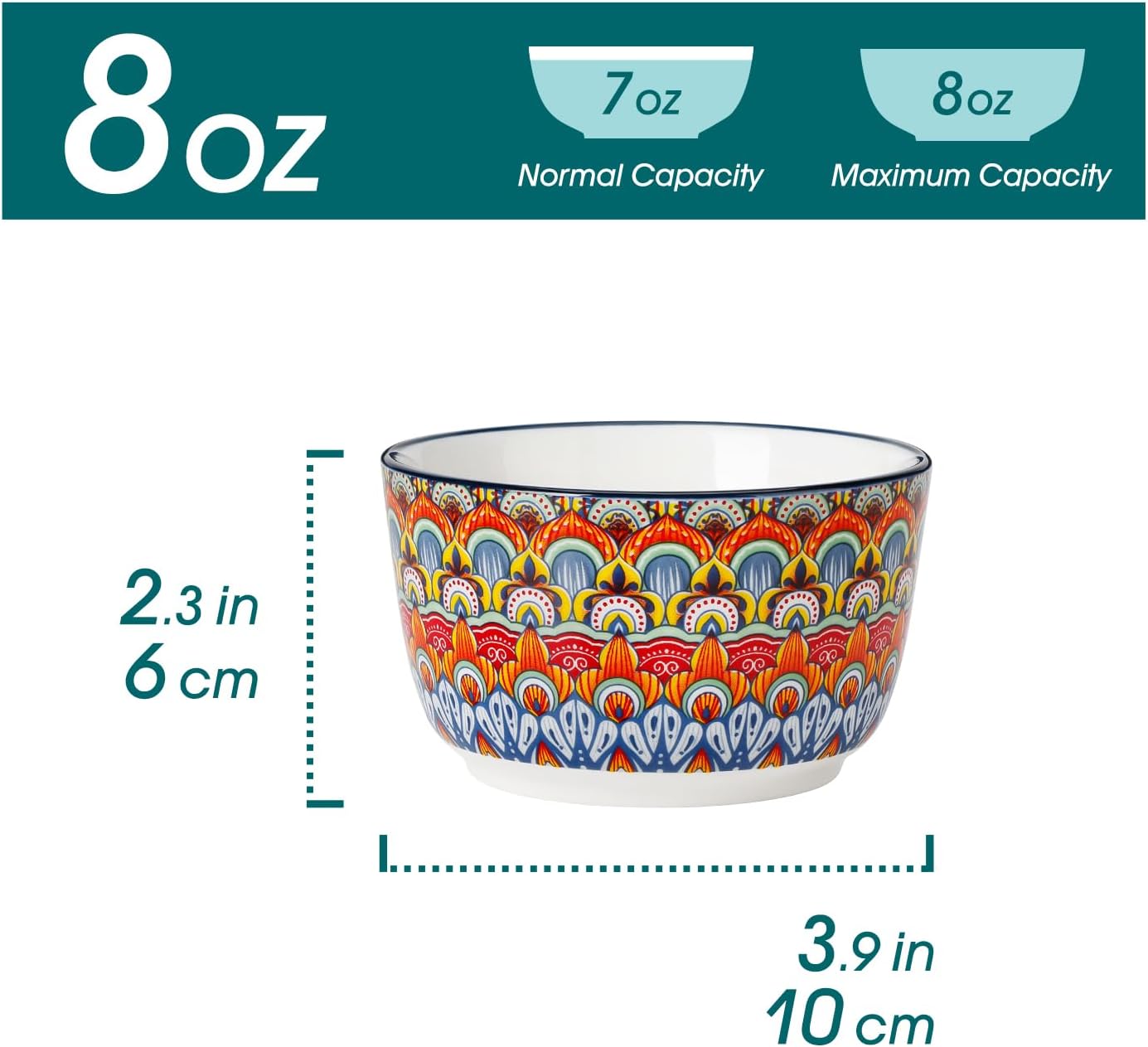
If you have ever set a dinner table and wondered whether a bright cobalt or terracotta dish would actually hold up in the oven — or whether it would just look good on the shelf — you are already asking the right question. A ramekin (pronounced RAM-uh-kin) is the small, individual baking dish a soufflé rises inside; when it comes out of the oven and goes straight to the table, it does double duty as both cooking vessel and serving piece. That oven-to-table journey is the whole game for dinner-party hosting: the soufflé won’t wait, so there’s no time to transfer it, and the dish your guest sees is the dish you baked in. This guide is for the home baker who already understands the basics and is now deliberating on something more considered — a colorful set that performs under heat, photographs well at the table, and doesn’t crater after two seasons of use.
The tradeoff at the center of this decision is real: purely decorative glazes and pigments can behave differently under repeated high-heat cycling than the utilitarian white porcelain most soufflé guidance is written around. That doesn’t mean color is a compromise — it means you need to know which colors and which makers have engineered their glazes to close that gap.
Why Color Complicates the Heat Equation (and When It Doesn’t)
Plain white porcelain — the kind Pillivuyt has been making in the Creuse region of France since 1818, per the Pillivuyt product catalog and glaze specification notes — is essentially the reference standard for soufflé baking. Its pale, dense body conducts heat evenly from the bottom up, and its glaze is fired at temperatures high enough to render it nearly impermeable. When manufacturers introduce colorants, they introduce variables: some pigments require lower firing temperatures to preserve color fidelity, and a lower-fired glaze is more porous, more prone to crazing (the hairline-crack network that appears over time), and occasionally more reactive with acidic batters.
The practical consequence is uneven in the market. A number of heritage producers — Emile Henry, Le Creuset, Pillivuyt in its colored lines — have invested in proprietary ceramic bodies or multi-layer glaze systems specifically designed to maintain performance across color ranges. Emile Henry’s HR (High Resistance) Ceramic technology, documented in the brand’s product materials, was developed to allow deep, saturated color while preserving the thermal shock resistance that oven-to-dishwasher cycling demands. Owners across aggregated reviews consistently report that Emile Henry dishes in Burgundy, Charcoal, and their signature Flame colorway behave identically to the white versions in terms of rise and bake time — which is the outcome you want.
Where the risk concentrates is in the mid-market import segment: dishes sold primarily on color at prices that seem like a bargain ($8–$18 per dish) but whose glaze specifications are either absent from product listings or vague. Reviewers at Serious Eats, in their 2024 ramekin roundup, flag this category directly — noting that dishes with visually appealing exterior glazes often have no manufacturer documentation on firing temperature, and that long-run owners of these sets report crazing inside 18 months of regular use. Crazed interiors are not just cosmetic; they become harder to sanitize and can subtly affect the soufflé’s release behavior as the surface texture changes.
The decision filter here is simple: if a manufacturer can’t tell you the firing temperature of their glaze or confirm their dish is oven-safe to at least 480°F / 250°C, the color is decorative in the pejorative sense. Your soufflé can reach internal temperatures above 200°F, and the dish will see 375–425°F oven environments repeatedly.
The Contenders: What the Market Looks Like at Each Price Tier
Entry tier ($12–$35 for a set of four): HIC Harold Import Co. and Mason Cash both offer colored or patterned options in this range. The HIC porcelain ramekins — available in a classic white and occasionally in sets with colored exteriors — are consistently cited by Food52 in their ramekin coverage as reliable performers for the price, with a straight-wall geometry that supports proper soufflé rise. Mason Cash’s traditional stoneware, which has been manufactured in England since 1800, comes in a warm terracotta that reads as genuinely table-worthy; the stoneware body is thicker than porcelain, which means slightly slower heat uptake but good retention once at temperature. The Kitchn’s tested evaluation of ramekin sets rates Mason Cash favorably for durability and notes that the terracotta colorway holds up without visible crazing through extended use.
Mid-tier ($35–$85): This is where Emile Henry enters, and it’s arguably the most interesting tier for someone building a dinner-party set they intend to keep. The Emile Henry individual soufflé dishes (typically $18–$25 per dish purchased in sets) bring the HR Ceramic body to colors — Burgundy, Figue, Charcoal, and the terracotta-adjacent Flame — that are genuinely suited to a table set for six. The geometry matters here too: these dishes have the slight taper at the base and straight upper walls that soufflé recipes assume, so you’re not improvising bake times or fighting with a sloped interior.
Upper tier ($85–$180+): Le Creuset stoneware ramekins in the brand’s full colorway — Cerise, Marseille, Artichaut, and a rotating seasonal palette — represent a different value proposition. Per Le Creuset’s product care documentation, the stoneware body is fired at high temperatures with a proprietary three-layer glaze system that the brand rates as chip- and crack-resistant under normal oven and dishwasher use. Owners in long-run reviews frequently note that Le Creuset pieces purchased a decade ago still show no interior crazing, which is the kind of longevity that changes the cost-per-use math entirely. At roughly $25–$35 per individual ramekin, a set of six for a dinner party is a $150–$210 investment — but if those dishes are still on the table in 2036, the math resolves differently than it appears on the day of purchase.
By the Numbers
| Tier | Price per dish | Firing temp documented? | Glaze layers | Crazing reports (long-run reviews) |
|---|---|---|---|---|
| Import/unspecified | $8–$15 | Rarely | Unknown | Common within 18 months |
| HIC / Mason Cash | $4–$9 | Partial | Single | Occasional after 3–5 years |
| Emile Henry HR Ceramic | $18–$25 | Yes (≥500°C) | Multi | Rare in published reviews |
| Le Creuset Stoneware | $25–$35 | Yes | Three-layer | Very rare in long-run owner reports |
Geometry, Color, and the Dinner-Table Reality
Here is a consideration that buying guides sometimes skip: a dish that photographs beautifully in a product shot can read very differently when it’s surrounded by six other dishes, a tablecloth, glasses, and candlelight. The color you choose should work in context, not in isolation.
Deep, saturated colors — Le Creuset’s Cerise (a vivid cherry red), Emile Henry’s Burgundy, or a cobalt blue from any number of makers — read boldly even in low-light dinner settings. They function like punctuation at the table. If your serving style is formal and the soufflé is the visual centerpiece of the course, a strong color makes sense. If your dinner-party aesthetic is quieter — linen napkins, unglazed wood, a more relaxed presentation — the muted range tends to integrate better: Emile Henry’s Charcoal, Mason Cash’s terracotta, or the off-white/cream options some makers offer in their “colored” line.
There’s also the question of what the soufflé itself looks like against the dish. A chocolate soufflé’s deep brown crown reads differently against a white interior versus a cream or butter-colored interior. A cheese soufflé’s golden top can disappear slightly against a warm terracotta. These are not deal-breakers — they are presentation details worth thinking through once before you invest in a set of six, because individual ramekins are committed purchases. You are not likely to mix six different colors at a dinner table for a soufflé course; the visual logic of the service depends on uniformity.
Serious Eats’ 2024 ramekin overview makes a related point about interior glaze finish: a smooth, near-glassy interior allows the batter to climb cleanly against the wall during rise, while a rougher interior (common in lower-fired stoneware) can create micro-drag that slightly impedes the climb. For most home soufflé baking, this effect is marginal — but if you are baking for guests who will notice a difference between a rise that crests cleanly above the rim versus one that falters slightly, it is a real variable.
The Decision Frame: If X, Then Y
If you are outfitting a dinner-party service for the first time and your budget is under $50 for a set of four, start with HIC or Mason Cash. The Mason Cash terracotta is genuinely table-worthy and the heat behavior is well-documented by long-run users. You will not be embarrassed by either.
If you are building a set you intend to keep for five or more years, and color matters to you aesthetically, Emile Henry at the mid-tier is the clearest call. The HR Ceramic body closes the performance gap with white porcelain, the color range is curated rather than trend-driven, and the per-dish cost is low enough that a six-piece set is achievable without a large single outlay.
If you are hosting at a level where the dishes themselves are part of the hospitality statement — or if you are buying as a gift for someone who will understand what they are receiving — Le Creuset stoneware in a considered color is the right answer. The three-layer glaze system, the documented firing temperatures, and the decade-plus longevity reported by owners justify the premium. A set of six Le Creuset ramekins in Cerise or Marseille, presented as a soufflé service, is the kind of gift that a serious home cook keeps and uses.
If you are tempted by a colorful import set at under $15 per dish with no firing-temperature documentation: pause. The color is real. The performance claim is not verifiable. And a soufflé that falls because the heat distribution was uneven, in a dish that is crazing by next winter, is an expensive lesson at any price point.
Color at the table is worth pursuing — the dinner-party soufflé service is one of the few moments in home cooking where the vessel is genuinely on display. The question is only whether the dish you chose can back up how good it looks.